
R.E.A.D.I.N.G.: THE UNIVERSAL LISTENING STRATEGY

In the IELTS Listening component, due to the test’s settings and environment, for example, a shortage of time, a multitude of question variants, and so on, to assume that there is a single method or formula that will work for all question types is delusional and foolish.
There can be no universal rule that would be deemed successful if applied to all question types.
However, there is a strategy, when applied and practiced efficiently, that will help you comprehend and master the grand picture behind Listening and guide you to become faster at understanding and filtering out the answers.
This strategy should be followed taking into account the following premise:
“Knowing English does not mean you will understand everything you hear or read. It simply means you can understand the grand picture; the full context of what you hear.”
But there is good news. The good news is that:
"You do not need to hear or understand every single word from the Listening audio to be able to answer all the questions in a given task. In fact, even English academics would fail to hear or understand some words."
Therefore, if applied correctly, this strategy will help you fully understand the context of the audio and filter out the answers.
R.E.A.D.I.N.G. is the grand strategy framework that will allow you to comprehend the big picture of any IELTS question type, prepare you fully, and equip you with the readiness needed to listen attentively and extract the answers to the fullest.
As the name reflects, this strategy is inspired by the following assertion:
| IN ANY LISTENING TASK, THE READING THAT OCCURS BEFORE THE AUDIO PLAY UNDOUBTEDLY PLAYS THE MOST IMPORTANT ROLE IN PERFORMING WELL ON THE TASK. |
With this assumption in mind, you can already grasp the largest part of the strategy before diving into further explanations.
Let's take a closer look at the R.E.A.D.I.N.G. strategy.
| Letter | Stands for |
| R | Read before Listening |
| E | Eliminate the Noise |
| A | Anticipate (Predict) the Answer |
| D | Deflect Distractions |
| I | Identify Keywords and Synonyms |
| N | Note While Listening |
| G | Grammaticize and check spelling |
1. Read Before Listening
This is the most crucial part of mastering IELTS Listening. Use every second before the recording starts to actively and attentively read every single question and instruction. Understand the context, highlight key words, and prepare your mind for what’s coming. If you wait until the audio begins, you’re already behind.
Even if you don’t understand every word, focus on the surrounding words and structure. That alone is enough to give you direction and eliminate wrong answers later.
Strategies: Strategy 1. Another crucial strategy to follow is when you start reading, try to indulge yourself in the topic in task. Let's say the listening task is talking about "Booking a hotel through a phone call", here you will put yourself in the context, indulge yourself in the scene, where you will be just like a third character in the scenario. Strategy 2. Focus more on words (verbs, nouns, etc.) around the blanks, they will mostly give you clues about the answer. For non-blank questions, focus on the keywords in the question. More on how to spot keywords in a question will be discussed in the next parts. |
|
Practices
Practice 1. Questions 1–6. Listen carefully and fill the following form
| 🎙️072 | 📝072 | ||||||||
|
|
Practice 2. Part I. Multiple Choices Questions.
| 🎙️073 | 📝073 | |
Questions 1–3. Listen carefully and choose the correct option. 1. Where does the tour start? 2. What must students have to access laboratories? 3. What benefit do first-year students get at the gym? |
|
Part II: Map Labeling
| 🎙️073 | 📝073 | |
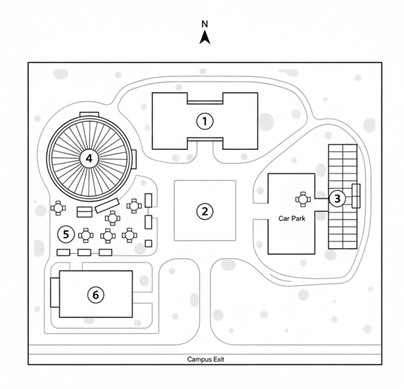
Questions 1-6. Label the map using the correct letters A–E. Campus Map Labels A. Sports Complex B. Cafeteria Garden C. Science Building D. Student Union Hall E. Main Library F. Student Centre
|
|
2. Eliminate the Noise
While reading, tune out everything else, your stress, the room, the accent, fully emerge yourself to the listening. Enter the scene and be part of the play “just like the Greek Gods in the face of challenge, concentrate your force”. Let your brain enter what is called “The IELTS Mode”. This is a deep level of focus state where you fully emerge yourself in the test and maximize your concentration. Without a deep focus, even the most skilled of English test takers will fail to perform well.
Practices
Practice 1.
| 🎙️074 | 📝074 | |
Choose the best option for each question
|
|
Practice 2.
| 🎙️075 | 📝075 |
Listen carefully and complete the form Sustainable Urban Living
|
|
Practice 3. Listen carefully and answer the questions
| 🎙️076 | 📝076 | |
Part 1 – Match the Students with Their Focus Techniques A. Anna i. Listens to background music | Part 2 – Match the Type of Distraction with Its Example A. Environmental i. Stress or tiredness | |
| ||
3. Anticipate the Answer
A detailed explanation about word prediction is already contained in the previous section's grand strategy. However, there's a need to recover it here even deeper.
Prediction is a superpower. Based on grammar, context, or logic, guess what kind of word is missing for completion, labeling and short answer question types. However, you need to reasonably guess the choices for MCQs and Matching question types.
As explained previously to fully get the best out of this anticipation phase, use the "G.Lo.W." micro-strategy.
| Letter(s) | Stands for | Explanation |
| G | Grammar clues | Verb tense, article, preposition before/after |
| Lo | Logic | What would make sense in real life? |
| W | Word type | Noun? Number? adjective? Etc. |
| Note. This G.Lo.W. micro-strategy works best for Completion, Labeling and Short Answer Type Questions. For the other question types Matching and MCQs, the anticipation process is done by logically predicting sentences or choices that would be rational and make sense. |
Practices
Practice 1. Listen carefully and match the information
| 🎙️077 | 📝077 | ||
Questions 1–3: Match each club with its MAIN ACTIVITY
Activities
| Questions 4–6: Match each club with the PRIMARY REASON STUDENTS JOIN
Reasons to Join
|
Practice 2. Listen carefully and label the plan below.
| 🎙️078 | 📝078 |
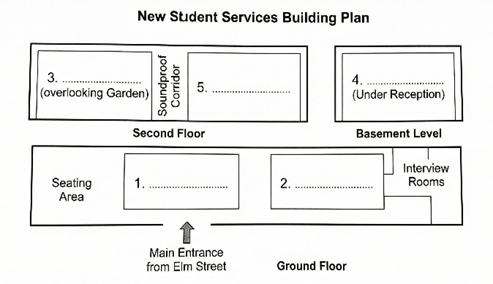 | Labels to add to the plan above.
|
Practice 3.
| 🎙️079 | 📝079 |
Listen carefully and complete the sentences below. Fill NO MORE THAN TWO WORDS per blank
|
|
4. Deflect (Avoid) Distractions
To efficiently test your English level, IELTS uses certain distractions in the listening. For instance, in case of MCQs(Multiple Choice Questions), you might hear all options in the audio but only 1 or 2 are correct, meaning there will be an obvious or imperceptible (a small) detail that makes other options fallible.
So be prepared for the following 3 most common IELTS listening distractions:
|
Note. The right answer is often at the end of a sentence or conversation shift. |
Practices.
Practice 1. Corrected opinions
| 🎙️080 | 📝080 | ||
Part A: Match the volunteer project to the correct location. Locations
| Part B: Match each project to its main activity. Teaching basic digital skills
Planting and maintaining greenery
| ||
| |||
Practice 2. Out-dated Information
| 🎙️081 | 📝081 |
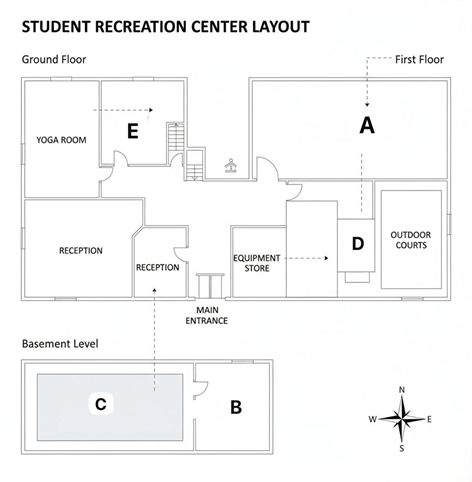 | Label the following areas on the map of the recreation center:
|
Practice 3. Half-Truths. Complete the sentences below with ONE WORD only.
| 🎙️082 | 📝082 | |
|
|
Strategy. In listening, always beware of contrasts and updates. Here are some strategies to handle distractions while listening:
Remember, this is a way for IELTS to test your grasp of English Language. |
5. Identify Keywords and Synonyms
Generally, paraphrasing is another technique for IELTS to test your linguistic skill. So most often than not, you will not hear the exact words or sentences you are looking for, but their synonyms or paraphrased versions.
For instance, In the question: Let’s say you have a multiple-choice question which goes: “Why did she choose the college?”
In the audio, you might hear something like: “I decided to apply there because it had an excellent reputation for academic excellence.”
From this, you should infer that the correct answer is related to “prestige,” “reputation,” or “academic standing,” rather than factors such as location or facilities.
| Strategy. During your active reading time, underline the verbs, nouns, or adjectives (refer back to “Anticipate(predict) the answer” section above). Ask yourself: what might they say instead if you have extra time after reading. Here focus on deeply thinking about what might be all the possible for the speaker to express the context that would answer the question. |
Practices.
Practice 1.
| 🎙️083 | 📝083 | ||
Complete the form below. Write NO MORE THAN TWO WORDS AND/OR A NUMBER.
|
|
Practice 2. Label the park map using the information from the conversation.
| 🎙️084 | 📝084 | |
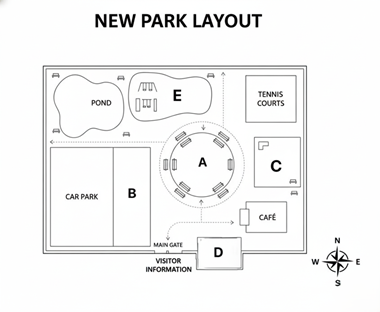 |
Label the map above with the following:
|
Practice 3. Complete the notes using NO MORE THAN TWO WORDS for each answer.
| 🎙️085 | 📝085 | |||||||||||||
Marine Conservation Programs
|
|
Strategy. In addition to the previous strategies,
|
6. Note While Listening
Since we only have the chance to listen once in the IELTS listening test, and the audio can be very quick sometimes, then note-taking is the utmost support for storage and recall of information.
Smart listeners are not those who attempt to write everything they hear, but they write smart notes by using symbols and shorthand to speed the process and to keep in sync with the audio. Note taking is very crucial but do not sacrifice your synchronization to the audio for it.
Here are a couple of symbols, arrows, or codes to use for note taking mastery:
| Symbol | Hand Form | Meaning | Example |
| ✔ | check mark | correct / positive / agree | Tom: ✔ helpful |
| ✖ or X | cross | wrong / negative / disagree | Plan: X expensive |
| // | double slashes | repeated / emphasized | // safety rules |
| → | arrow | consequence / change / next | Rain → delay |
| … | three dots | unsure / incomplete | Address … check |
| ↑ | upward arrow | increase / rise / growth | ↑ prices |
| ↓ | downward arrow | decrease / drop / decline | ↓ sales |
| Time → just “t” or “@” | quick symbol for time | t 6:45 | |
| $ | dollar sign | money / cost / price | $120 fee |
| ~ | tilde | about / approximately | ~20 people |
| # | hash | number / item | #3 bus |
| →→ or >> | double arrow | moving forward / next step | >> new speaker |
| * | asterisk | important / main point | * Key factor |
| P (circle around) | person / speaker | Ⓟ Prof. Lee | |
| H (circle around) | home / house / venue | ⓗ Hill St. |
Note. As mentioned in the previous sections of the book, If you are familiar with notetaking, you might already have a working note taking style, if it fully works under the IELTS listening time pressure, do not change it. Stick to it. You might use the techniques discussed here to improve your note-taking style if necessary. Another thing worth noting is that some individuals, especially slow writers, find it hard to make notes. Some just happen to be able to answer fully without making notes. In this case instead of trying to adapt to the note taking strategy, focus on improving other skills and stick to your non-note taking technique. Lastly, some people are used to utilizing certain types of note-taking styles by using different symbols, characters, or codes to denote specific meanings. If you happen to have such a previous method, do not attempt to completely change your approach. Use the above note-taking symbols and codes to improve your method. |
Also hen applying the note-taking strategy, always keep this in mind: "Don’t try to write full sentences, just enough to recognize the answer when you read the question."
Use the "S.W.I.F.T." micro-strategy in (D. IMPROVEMENT) in the listening book.
Practices
Practice 1. Choose ONE answer A–D
| 🎙️086 | 📝086 | |
1. What is unique about St. Paul’s Clock Tower? 2. What is the final stop of the tour?
|
|
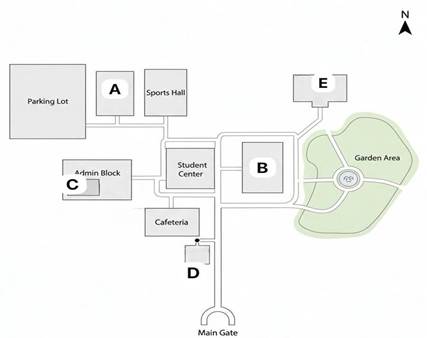
Practice 2.
| 🎙️087 | 📝087 | |
The New Campus Layout
| Label the following on the map (A–E):
|
Practice 3. Complete the Summary with NO MORE THAN TWO WORDS.
| 🎙️088 | 📝088 | |
Urban Farming Projects
|
|
| Strategy. As mentioned earlier, your notes’ structure or format matters very little. What is important is for your notes to trigger your recall of the information. Prioritize meaning over grammar. Do not attempt to write sentences as this will cause you to lose synchronization with the audio. Use symbols, arrows, or codes instead (refer back to S.W.I.F.T. Strategy). You need to have the ability to balance between your speed of taking notes and your focus. Do not overfocus on the writing to the point of losing track of the audio. At the end of the audio, make a quick review of your notes while reassessing your answers. |
6. Grammar and spelling check
Now that the audio has finished playing, you have done answering the questions and now you have some time to check your answers. This is undoubtedly one of the most important steps of the Strategy and thus your performance on the task at hand. Especially for the written answers. In questions such as Part I. Completion, Part V Short Answer Questions. And that is because of this: IELTS examiners are extremely intolerant of any kind of grammatical or spelling mistakes, no matter how mild(small) it is. This final check is also greatly important for the other questions Part II. Matching, Part III. MCQs, and Part IV. Labeling. As while answering, due to the speed and time pressure, you might have checked or chosen the wrong answer by mistake. So, give your answers a final check to leave no room for grammatical, spelling, or choice mistakes that could prevent you from getting the score you so diligently deserve.
Practices
Practice 1. Listen carefully and choose the appropriate answer for each question
| 🎙️089 | 📝089 |
| 1. When does the Environmental Studies course begin? A. Friday B. Saturday C. Monday D. Sunday | 2. Why has Urban Planning become more popular this year? A. It has fewer assignments B. It includes more creative projects C. It offers practical experience D. It is easier to pass |
Practice 2.
| 🎙️090 | 📝090 |
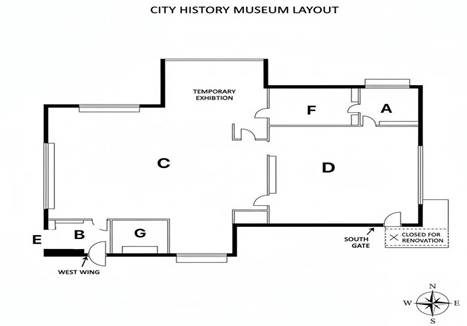 | Label the museum plan with the following:
|
Practice 3. Complete the sentences below using NO MORE THAN TWO WORDS.
| 🎙️091 | 📝091 |
|
|
This is the complete R.E.A.D.I.N.G. Strategy. The 7 steps of this strategy are meant to give you dimensional thinking around listening. By applying them in your listening, you will have the ability to think in different aspects of the audio you listen to allowing you to perform well on all listening parts.
| Note. R.E.A.D.I.N.G. is a Grand Strategy that can be applied in all the listening question types. However, in each type of question, there will be sub-strategies that are the simplified version of R.E.A.D.I.N.G., shorter and easier to apply. Utilize these sub-strategies as your compass to finding the answers. |


